Different Types of Joins in Oracle Explain Plan
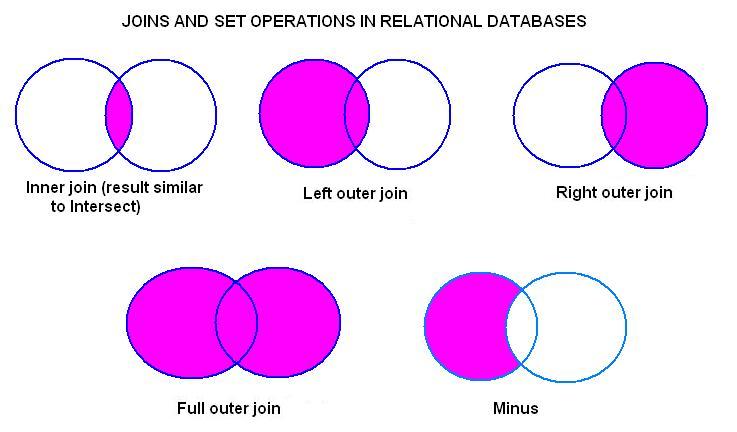
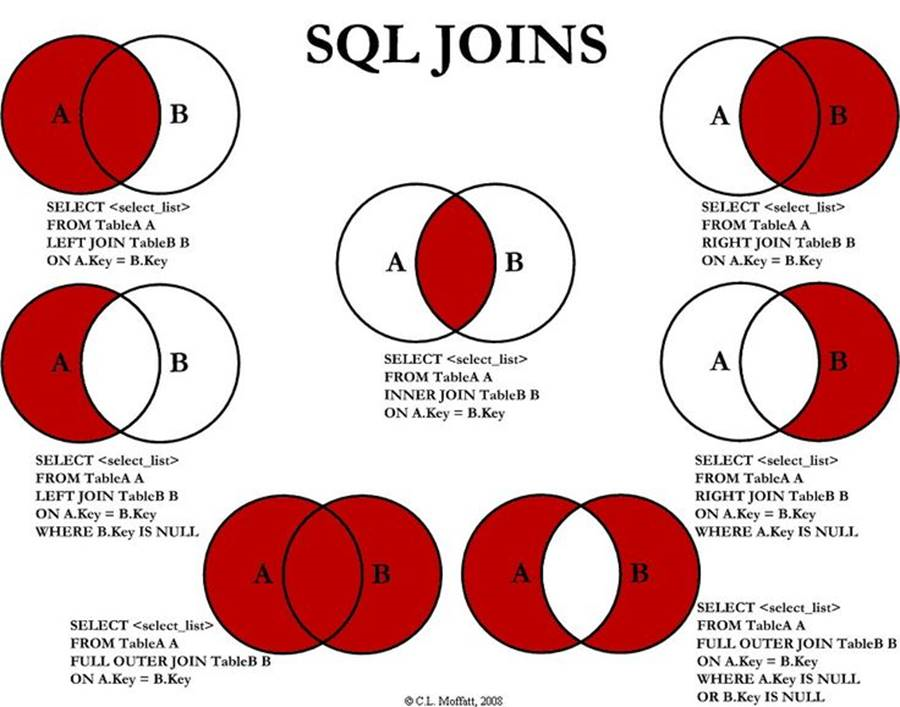
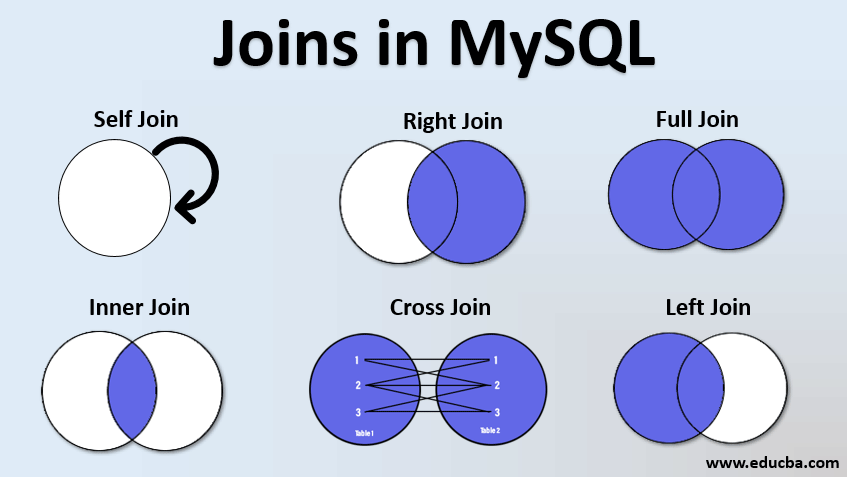
There are 4 different types of Oracle joins. Inner Joins also known as Simple Joins Equi Joins Outer Joins Left Outer Joins also called as Left Joins Right Outer Joins also called as Right Joins Full Outer Joins also called as Full Joins Self Joins Cross Joins also.

Pin By Francis Taillieu On Taillieu Info Sql Join Sql Language
Up to 10 cash back In this case data from the CHANNELS and PRODUCT are read using the INDEX CHANNELS_PK and PRODUCTS_PK and when both result sets are ready they are joined together.
. The same query when EXPLAINed from the DEF user the one with SELECT CATALOG shows a HASH join. Nested Loops Join Nested loops joins are useful when small subsets of data are being joined and if there is an efficient way of accessing the second table for example an. Outer join aLeft Outer Join bRight Join cFull Outer Join 5.
It then scans the other table in the join usually the larger one and probes the hash table for matches to it. HASH JOIN The type of join we do not like. Hash Join Hash joins are designed to join large data sets.
Types of JOIN are - Inner - Outer Left Right and Full - Cross Inner Inner joins are also called as Equi join. Partition-wise joins are either of the following. Supported join types Both the RBO and CBO support these three join types.
Single Table Hints are hints which can be Specified on one table or view. It compares two columns from different tables and combines pair of rows each containing one row from each table for which join condition is true. This generates lots of IO and therefore buffer gets.
Here are the different types of the JOINs in SQL. I would like to give the different examples which are useful for SQL query performance tuning in depth. Partition pruning Are only the necessary partitions being accessed to answer the query.
Nested loop merge join and hash join. In Oracle there are ten different types of joins are as given below. The other table may or may not be.
Examples of Single table hints. Simple JOIN SELECT plast_name tdeptName FROM person p dept t WHERE pid tid. Cross JoinCartesian Product 2.
Things to know before we start reading Oracle Explain Plan. Nested Loop The driving table is read once and for each row in the driving table the inner table is processed once. Nested loops are suitable joins for a small subset of data.
For each record in the driving table the first one Oracle scans all records in the joined table. The optimizer computes that subplan as well. We do not want to see in the execution plan.
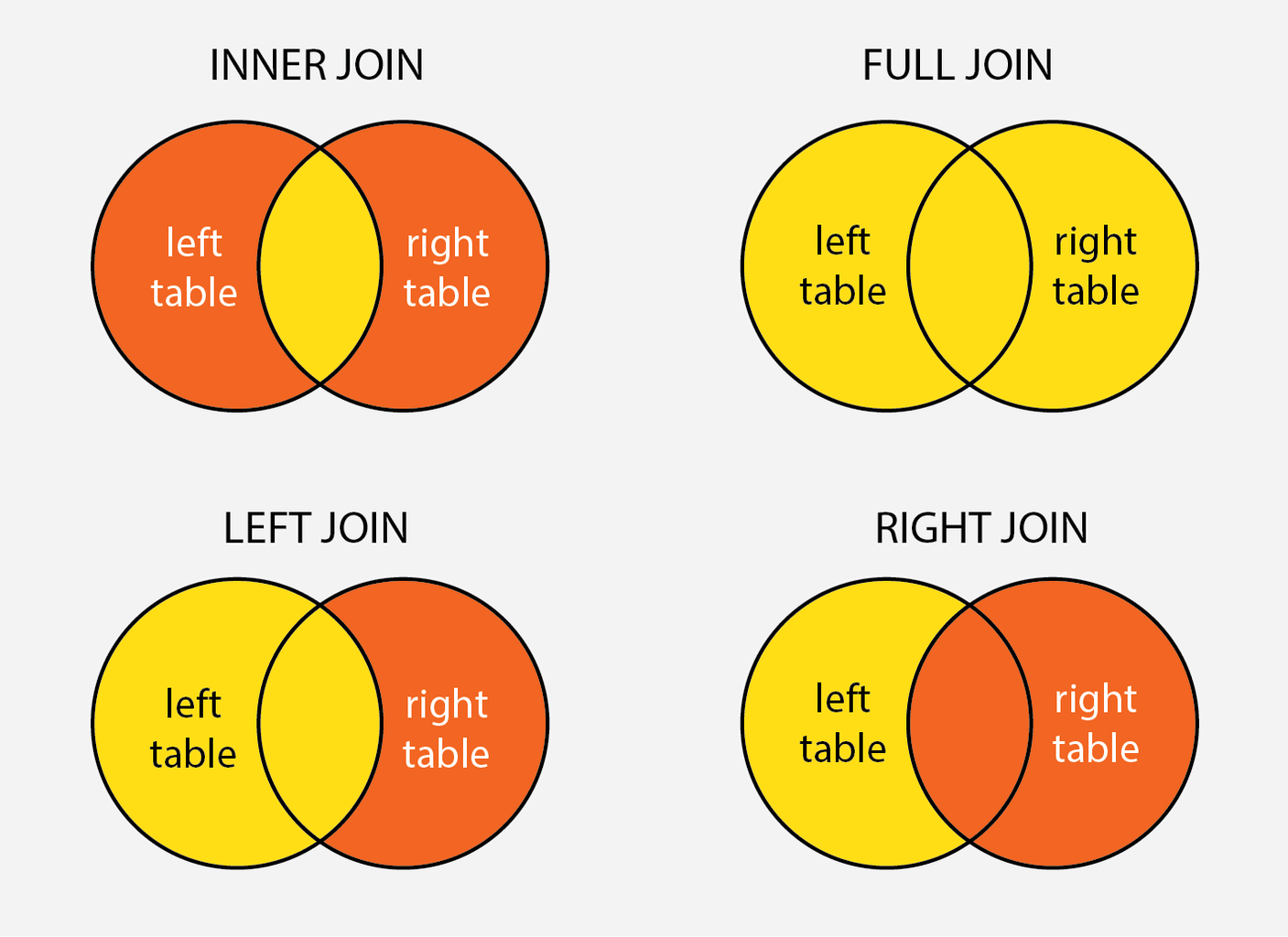
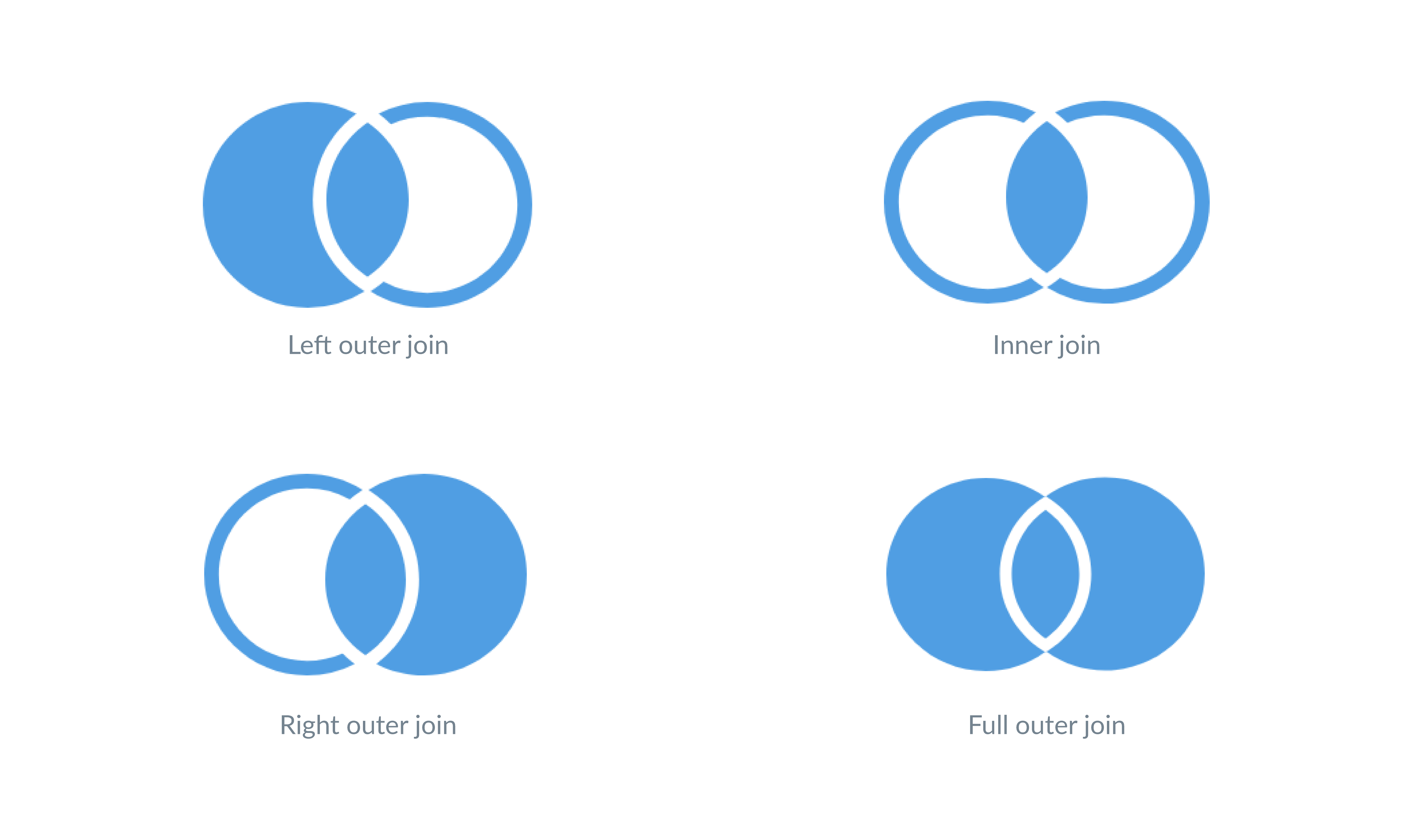
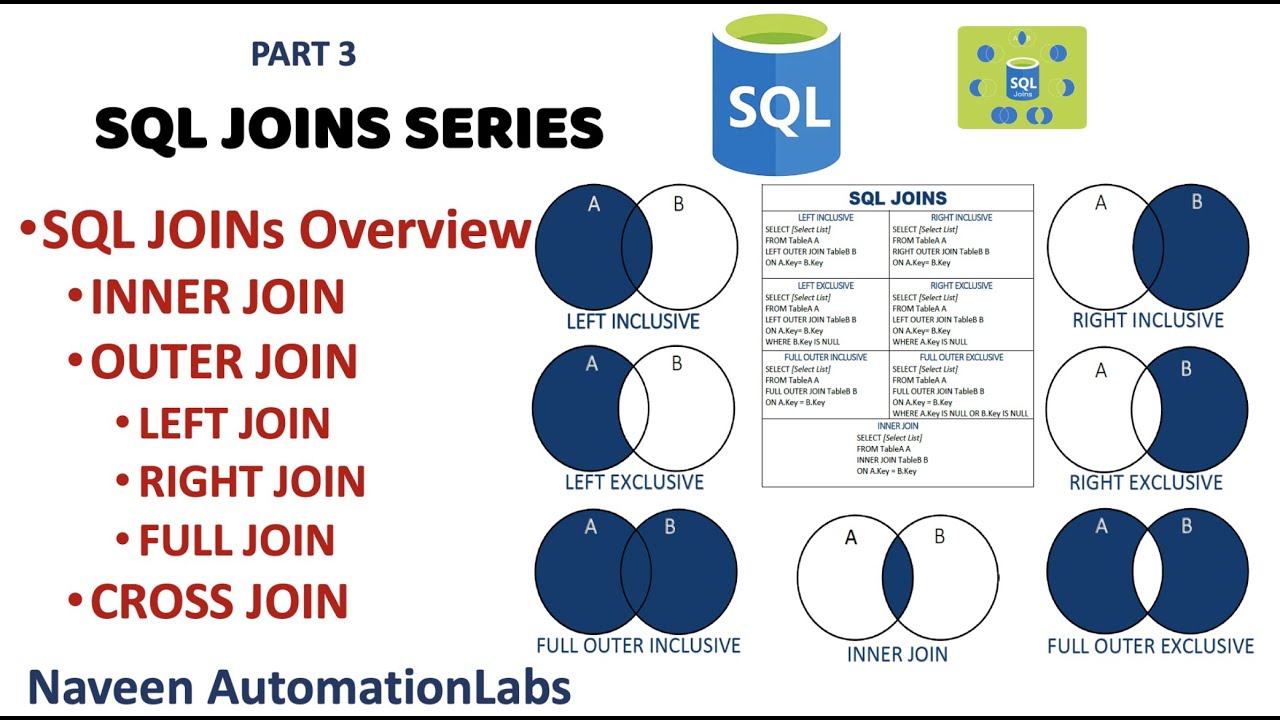
Below given in one such classification. All the different subplan steps are listed in the execution plan Tom points out but the optimizer eventually chooses one subplan. Oracle INNER JOIN or sometimes called simple join Oracle LEFT OUTER JOIN or sometimes called LEFT JOIN Oracle RIGHT OUTER JOIN or sometimes called RIGHT JOIN Oracle FULL OUTER JOIN or sometimes called FULL JOIN.
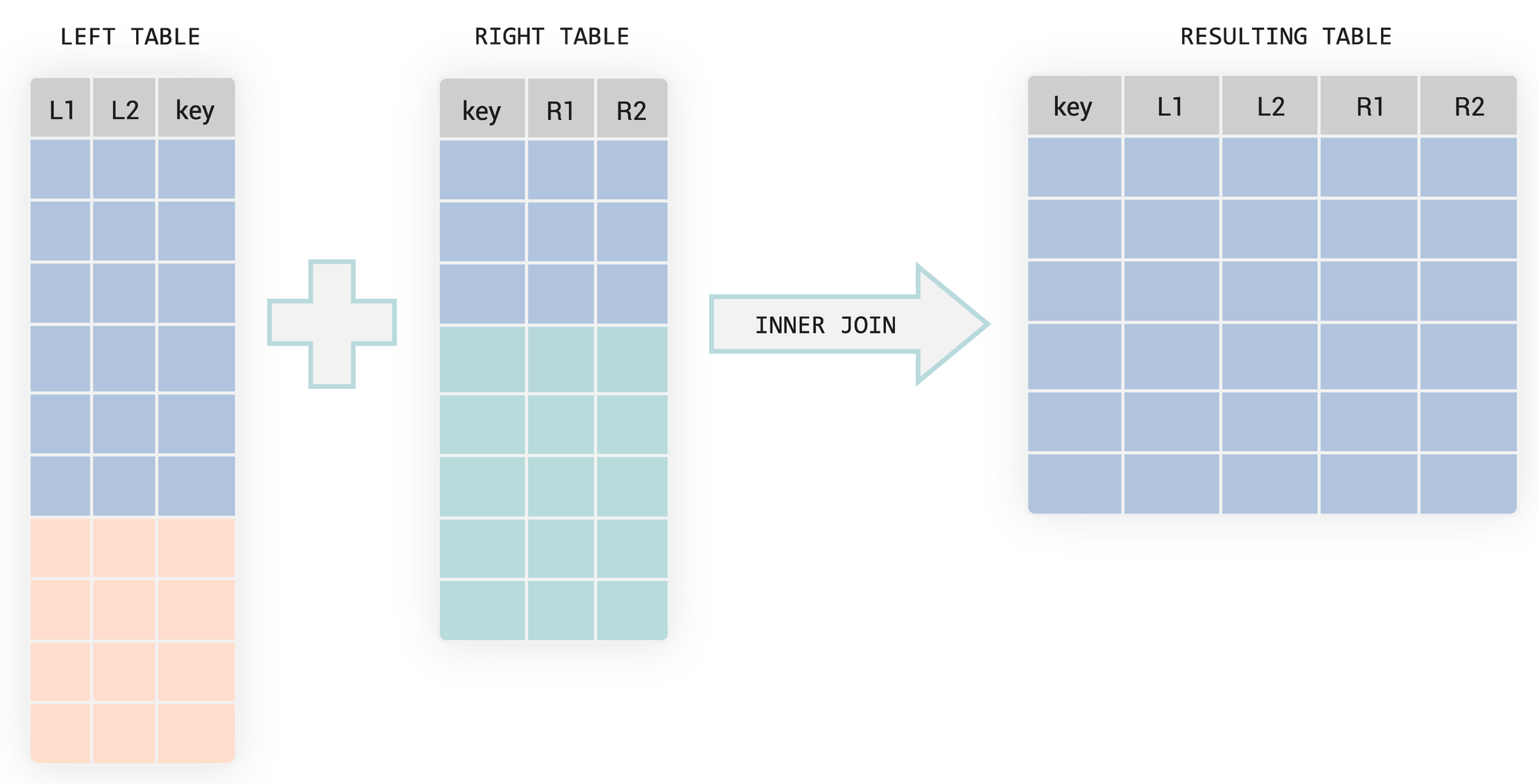
Returns records that have matching values in both tables. If you see this method when joining big tables force hash joins instead. In a HASH join Oracle accesses one table usually the smaller of the joined results and builds a hash table on the join key in memory.
This is another type of join oracle engine is using. Some oracle SQL statements useds the Nested loop join. Join type The type of join eg outer anti semi etc.
When performing an EXPLAIN plan from user ABC we see NESTED LOOP as the join mechanism and the query just runs and runs. We get four different types of joins based on the subset of data we are picking from the two tables. Returns all records from the left table and the matched records from the right table.
Full partition-wise join Both tables must be equipartitioned on their join keys or use reference partitioning that is. Types of joins are. These kind of join used when we are using any.
Returns all records from the right table and the matched records from the left table. SELECT column-names FROM table-name1 JOIN table-name2 ON column-name1 column-name2 WHERE condition Types of Joins in SQL Inner Join Left Join Right Join Full Join Below we explain different types of Joins in Detailed. Types of Joins Inner Joins Simple Join Outer Joins Left Outer Join Left Join Right Outer Join Right Join Full Outer Join Full Join Equijoins Self Joins Cross Joins Cartesian Products Antijoins.
Nested Loop join. For the small tables we require to use the. As a result of such a join merge join will work very well because both of the columns to be joined are in ordered structure.
Partial partition-wise joins Only one table is partitioned on the join key. - Equijoins - Non-equijoins - self join - outer join What is a join explain the types of joins. Larger result set should be the driving table.
Join order The order in which the tables are joined to each other. In this section I would like to give you Oracle Hints types and Oracle Hints Examples. The smaller the inner result set the faster the Nested Loop will perform.
Merge Join compares two columns in a join with these two columns and if it is equal it returns the result. If the table ASSINMENT has only imited number of rows with the given ITEM_ID there is practically no. Similarly the new data calls for the use of a different type of joina hash join instead of nested loops as indicated in step 1.
Equi Join and Non Equi Join Lets see an illustrative example with two tables emp_tab and dep_tab. The Oracles Optimizer supports three join methods. Nested Loops Hash Join and Sort Merge Join.
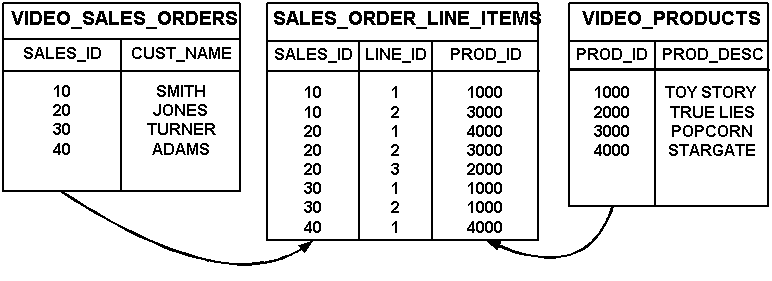
A Join is used to create query using two or more tables and views. They are the most common joins used in the SQLPLUS. Find name and department name of students who have been allotted a department InnerEquiNatural JOIN SELECT from Emp INNER JOIN Dept WHERE EmpempidDeptempid Extracts data that meets the JOIN conditions only.
Single Table Hints. Join method The method eg hash sort-merge etc used to join tables with each other. Oracle uses a HASH join efficiently only if the parameter PGA_AGGREGATE_TARGET is set to a large.
1 join first and than aggregate to get the MAX wait_position 2 get the MAX value first and than join trivial the two one row tables. Different types of Joins 1. In this case it is performing NESTED LOOP JOIN operation.
It seems that the HASH join is the more efficient in this case but that is largely irrelevant for the question. If you are wondering what is NESTED LOOP Join then dont worry It is one of the JOIN type that the oracle has used to. An Oracle JOIN is performed whenever two or more tables are joined in a SQL statement.

Pin By Mahak Malik On السيارات والدراجات النارية Sql Teaching Coding Sql Cheat Sheet
Join Operator
Join Types In Sql Server Database Tutorials

Mysqljointypesthumbnail Mysql Join Types Mysql Sql Join Types
Sql Left Outer Join Explained With Examples Golinuxcloud

Explain The Explain Plan Join Methods

Explain The Explain Plan Join Methods
Sql Join Types

Difference Between Row Number Rank And Dense Rank In Sql Server Oracle Sql Sql Tutorial Sql Server

Joining Data Tables In Tableau And Alteryx The Information Lab Sql Join Sql Data Visualization Design
Joins In Mysql Learn Top 6 Most Useful Types Of Joins In Mysql
Sql Join Types Explained Learnsql Com
3 Types Of Sql Joins Youtube

Pin By Michael Thompson On Data Science Sql Cheat Sheet Sql Sql Commands

Sql Joins Sql Join Venn Diagram Sql
Creating And Maintaining Joins

Anyone Have An Erd Symbols Quick Reference Erd Cheat Sheets Relationship Diagram

Inner Join Animated With Gifs Sql Data Science Learning Learn Computer Coding
What Are Inner Outer Left And Right Joins In Sql Quora


Comments
Post a Comment